Views: 0 Author: Site Editor Publish Time: 2025-09-09 Origin: Site
Have you ever struggled with uneven stitches or broken threads? The secret often lies in the smallest sewing machine parts—needles. Choosing the right needle size and type is crucial for fabric care and stitch quality. In this article, you will learn about common sizes, types, and when to use them.
When people think about sewing machine parts, they often imagine big components like the motor or presser foot. Yet, one of the smallest parts—the needle—has the greatest effect on stitch quality. Knowing the anatomy of a sewing machine needle helps you select the right one for every project and avoid common problems like skipped stitches or fabric damage.
Every needle is built with specific parts that serve unique functions:
● Shank – The top part that fits into the needle clamp. Usually flat on one side for proper alignment.
● Shaft – The long body of the needle that determines its strength. Thicker shafts are made for heavy fabrics.
● Groove – A small channel that holds the thread steady as it passes through fabric.
● Scarf – A notch on the back of the needle. It lets the bobbin hook grab the thread and form a stitch.
● Eye – The hole near the tip where the thread passes. Eye size changes depending on thread type.
● Point – The sharp or rounded tip that first meets the fabric. Needle points are designed for different materials.
These parts work together to create smooth, consistent stitches. If one element is mismatched to the fabric or thread, the entire process suffers.
A needle is more than just a sharp point. Its design controls how fabric and thread interact:
● A sharp point pierces tightly woven fabrics like silk, creating clean lines.
● A ballpoint tip pushes fibers aside, protecting knits from tearing.
● A large eye reduces friction for metallic or specialty threads.
Using the wrong design can cause thread shredding, broken needles, or even visible holes in fabric. In B2B settings—like garment manufacturing—these small errors scale into wasted materials and lost production time.
Skipped stitches are among the most frustrating sewing problems. They happen when the hook fails to catch the thread loop. This usually occurs when the needle point or scarf isn’t designed for the fabric at hand.
● On stretch fabrics, a stretch needle with a deep scarf allows reliable stitch formation.
● On heavy denim, a reinforced shaft prevents bending and ensures proper hook clearance.
● On delicate fabrics, a finer point avoids cutting fibers, so stitches remain even.
Correct pairing keeps machines running smoothly and extends the lifespan of other sewing machine parts. For businesses producing apparel or upholstery, consistent stitch quality is not optional—it’s a core requirement.
Needle Part | Function | Example Impact on Sewing |
Shank | Connects to machine clamp | Proper fit prevents misalignment |
Shaft | Provides strength | Thicker shafts resist heavy fabrics |
Groove | Guides thread | Prevents thread breakage |
Scarf | Helps form stitch | Avoids skipped stitches |
Eye | Holds thread | Larger eyes reduce friction |
Point | Penetrates fabric | Shape decides fabric compatibility |
Choosing the right size is one of the most important steps in sewing. It directly affects how fabric, thread, and other sewing machine parts perform together. Too small, and the thread may snap. Too large, and the fabric may tear. Let’s break down how the sizing system works and what numbers like 80/12 or 90/14 actually mean.
Sewing needles use two numbering systems:
● European sizes range from 60 to 110.
● American sizes range from 8 to 18.
Most packages show both numbers side by side, such as 80/12. The first number is European, the second is American. A higher number always means a thicker needle shaft. For example, a 60/8 is fine for delicate silk, while a 110/18 is built for heavy canvas.
The rule is simple:
● Light fabrics like chiffon or voile → small needles (60/8 or 70/10).
● Medium fabrics like cotton or linen → medium needles (80/12 or 90/14).
● Heavy fabrics like denim or upholstery → large needles (100/16 or 110/18).
Using the wrong size puts strain on other sewing machine parts, like the presser foot and bobbin hook. It can also shorten machine life.
Needle size doesn’t work alone. It interacts with other sewing machine parts to create a balanced stitch:
● Tension system – Thin needles with fine thread need lower tension. Thick needles with heavy thread often require higher tension.
● Presser foot pressure – Lightweight fabrics paired with fine needles need lighter pressure, while thick fabrics and big needles need stronger pressure.
● Feed dogs – Proper needle size ensures smooth fabric feeding without skipped stitches.
When all these parts are balanced, your sewing results improve dramatically. If one is mismatched, issues like uneven stitches or broken needles appear quickly.
Tip: In large-scale production, keep a needle size chart near machines. It helps operators quickly match fabric type with the right size, reducing downtime and fabric waste.
Among all sewing machine parts, the needle is the one most frequently changed. Each type is designed to handle different fabrics and tasks. Choosing the wrong one can lead to skipped stitches, thread breaks, or even fabric damage. Below we cover the most common types, how they work, and when to use them.
Universal needles are the most versatile option. They have a slightly rounded point, which lets them handle woven and some knit fabrics. Sizes like 80/12 or 90/14 are included in most starter kits.
● Best for everyday sewing projects.
● Works with cotton, linen, and synthetic blends.
● Common in household machines and training setups.
If you are unsure which to start with, a universal needle is the safest choice.
Knits are tricky because the fibers stretch and move during stitching. Ballpoint and stretch needles solve this issue:
● Ballpoint needles have a rounded tip that slides between fibers instead of piercing them. Ideal for T-shirts, rib knits, or fleece.
● Stretch needles have a special scarf design that prevents skipped stitches on elastic fabrics like Lycra and swimwear.
By using these, stitches stay smooth, and fabric keeps its elasticity.
Denim and canvas are thick and tightly woven. Standard needles bend or break on these fabrics. Jeans needles fix that problem:
● Built with a reinforced shaft.
● Very sharp point for penetrating heavy layers.
● Common sizes: 90/14 to 110/18.
They are also excellent for sewing heavy twill, workwear, or bags.
Leather, suede, and vinyl resist standard needles. A leather needle has a unique chisel point that cuts into the surface:
● Creates small slits rather than holes.
● Works best with slow, controlled stitching.
● Not recommended for knit or woven fabrics.
Use a leather needle with a Teflon presser foot to prevent sticking on non-porous surfaces.
Specialty threads like rayon or metallics can shred under pressure. That’s where embroidery and metallic needles shine:
● Embroidery needles have larger eyes and grooves to reduce friction at high speeds.
● Metallic needles feature an extra-long eye, perfect for metallic and monofilament threads.
These designs ensure thread moves smoothly through the needle and reduces breakage.
Some projects require special precision or effects:
● Quilting needles – shorter length and reinforced shaft for multiple fabric layers.
● Topstitch needles – sharp points and large eyes to handle thick threads.
● Twin and triple needles – allow parallel rows for hemming and decoration.
● Other specialty needles – like Microtex for fine silk or wing needles for heirloom stitching.
Each needle type adds functionality, helping you adapt to a wide range of fabrics and techniques.
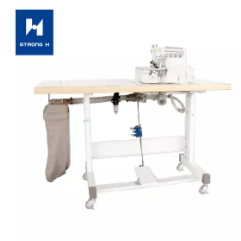
The needle is one of the smallest sewing machine parts, but it has the biggest role in fabric care. Using the right size and type ensures smooth stitches and prevents damage. Let’s look at how different fabrics pair with specific needles.
Delicate fabrics need fine needles to avoid puckering or tearing. Common choices are:
● 60/8 or 70/10 sharps – perfect for silk and chiffon.
● Universal 70/10 – reliable for cotton lawn.
● Microtex needles – ideal for precision on sheer fabrics.
A smaller eye and slim shaft glide through lightweight fibers without leaving holes.
Most everyday projects fall in this category. Medium fabrics work well with:
● 80/12 universal needles – all-purpose, great for cotton.
● 90/14 sharps – better for thicker linen or satin.
● Ballpoint 80/12 – useful if sewing cotton knits.
These options balance strength and flexibility, making them the default for many household and industrial machines.
Thick materials require reinforced strength to avoid bent needles. Recommended picks:
● 90/14 to 110/18 jeans needles – for denim jackets and workwear.
● 100/16 leather or denim needles – for canvas and upholstery.
● Topstitch needles – when using thicker threads for visible seams.
Using the wrong size here puts extra strain on the needle and other sewing machine parts like the bobbin case.
Elastic or nonwoven fabrics behave differently under the needle. Correct matching prevents skipped stitches:
● Ballpoint needles – for jerseys and cotton knits.
● Stretch 75/11 or 90/14 – for Lycra and high-stretch fabrics.
● Leather 100/16 – for real leather or vinyl projects.
Each option helps maintain fabric integrity while producing clean stitches.
Even the best sewing machine parts won’t perform well if the needle is wrong. A poor match in size or type causes skipped stitches, thread breaks, or even machine wear. Recognizing these problems early saves both fabric and time.
The needle is often the first place to check when problems appear. Common warning signs include:
● Skipped stitches – usually caused by using a needle too fine for thick fabric.
● Thread breakage – happens when the eye is too small or rough.
● Fabric damage – visible holes from sharp points on delicate fabrics.
If these symptoms show up, it means the needle doesn’t match the fabric or thread.
A dull needle tip cannot pierce fabric cleanly. A bent shaft hits parts it should not. Both problems increase wear across the machine:
● Presser foot – may not hold fabric evenly if needle is bent.
● Bobbin case – can be scratched or damaged by a misaligned needle.
● Tension system – thread breaks more often, leading to uneven stitches.
Replacing the needle is cheaper than repairing other sewing machine parts later.
Before blaming the machine, try these quick adjustments:
● Change size – switch to a thicker needle for denim or a finer one for silk.
● Change type – ballpoint for knits, stretch for Lycra, leather for suede.
● Adjust tension – lighter tension for fine thread, tighter for heavy thread.
Testing on a scrap of fabric ensures the new setup works before continuing.
Among all sewing machine parts, the needle is the one most often ignored. Yet, it directly influences stitch quality, machine health, and fabric results. A good care routine ensures consistent performance and reduces costly downtime.
Needles wear down faster than most people expect. The general rule:
● Replace after 6–8 hours of sewing.
● Replace after each project, especially if fabrics are thick.
● Replace immediately if it bends, breaks, or causes strange noises.
Even if a needle looks fine, micro damage can still harm thread and fabric.
A dull or rusty needle makes even the best machine struggle. To keep them in top shape:
● Store needles in a labeled case by size and type.
● Keep them in a dry, dust-free environment.
● Avoid mixing old and new needles.
This makes it easier for teams to grab the right option without guesswork.
Needles may appear sharp but still be damaged. Check for:
● Burrs near the eye – can shred thread.
● Bent shafts – may hit the presser foot or bobbin case.
● Dull tips – leave large holes or cause skipped stitches.
A 10-second inspection can save hours of rework.
Ignoring needle care does more than ruin fabric. It can damage other sewing machine parts:
● Scratched bobbin cases from bent needles.
● Misaligned tension caused by thread breakage.
● Increased wear on presser foot from poor penetration.
Replacing a needle costs little. Replacing a bobbin case or hook assembly costs much more.
For both beginners and professionals, having a simple reference saves time and prevents mistakes. This cheat sheet connects fabric type, thread, and needle choice. Using the right combination keeps sewing machine parts running smoothly and ensures clean results.
The right size depends on fabric thickness. Here’s a simple guide:
Fabric Weight | Needle Size (EU/US) | Recommended Type |
Light (silk, chiffon, voile) | 60/8 – 70/10 | Sharps, Microtex |
Medium (cotton, linen, satin) | 80/12 – 90/14 | Universal, Ballpoint (knits) |
Heavy (denim, upholstery, canvas) | 100/16 – 110/18 | Jeans, Topstitch, Leather |
Small sizes glide through delicate fibers. Larger sizes pierce dense fabrics without bending.
Needle eyes and grooves are designed for specific threads. Choosing the wrong match causes shredding or skipped stitches.
● Universal needles – polyester, cotton, or blends.
● Ballpoint/stretch needles – polyester or cotton-wrapped polyester.
● Jeans needles – heavy polyester or topstitch threads.
● Embroidery/metallic needles – rayon, metallic, or specialty embroidery threads.
● Leather needles – strong polyester or bonded nylon.
By pairing the right thread, the machine works with less tension and produces durable seams.
Never start a project without testing first. A 30-second test can save hours of repair.
● Always sew a short sample on scrap fabric.
● Check for skipped stitches or puckering.
● Adjust tension or switch needle size if results look uneven.
● Keep spare packs of common needle types near the machine.
This small step prevents thread waste and protects delicate materials.
Choosing the correct needle ensures smoother sewing, cleaner stitches, and longer machine life. Needles should be valued as essential sewing machine parts, not just small accessories. Building a basic kit with common sizes and types helps prepare for every project. STRONG H offers high-quality products and reliable service that support consistent results and long-term machine performance.
A: The throat plate guides fabric, protects sewing machine parts, and supports smooth stitching.
A: It stabilizes fabric near the needle, preventing jams and skipped stitches.
A: Remove lint and dust regularly to keep sewing machine parts running smoothly.
A: Yes, scratches or dents can snag fabric and reduce stitch quality.