Views: 0 Author: Site Editor Publish Time: 2025-09-17 Origin: Site
Have you ever thought about how a sewing machine changes things? Every day, you wear clothes and use blankets made by sewing. Even masks are made with sewing machines. People buy more than 12 million sewing machines each year. The fashion industry keeps getting bigger. The sewing machine made sewing much faster and easier. It gave women more chances to work. It also helped make lots of clothes in factories. When you look at the complete history of sewing, you see how one invention changed homes and factories.
Sewing machines changed how clothes were made. They made making clothes faster and easier. Factories could make more clothes. Clothes became cheaper for people to buy.
The story of sewing machines starts with hand stitching. It ends with new technology. Early inventors had many problems. They helped create new ideas for sewing.
Sewing machines created new jobs for people. Many women found work because of them. Sewing was not just a home task anymore. Women could earn money and show their creativity.
The Industrial Revolution helped sewing machines grow. Factories started using machines. This made more clothes and more jobs in cities.
Modern sewing machines have new features. Some have touchscreens and patterns you can program. These changes make sewing easier and more fun for everyone.
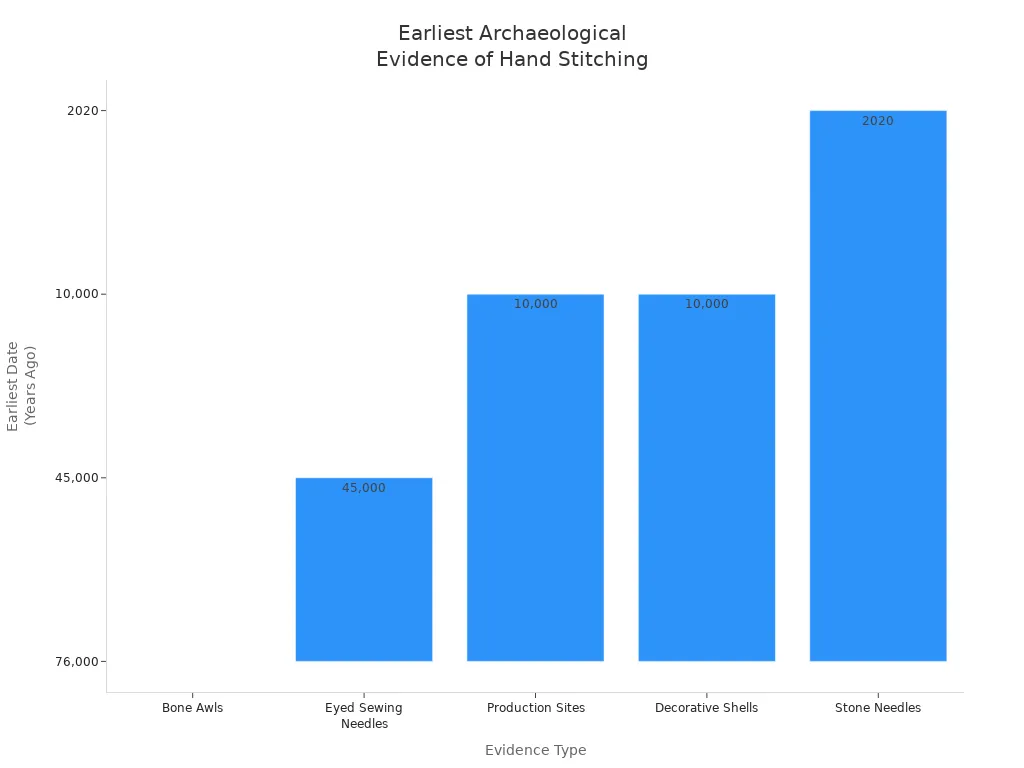
You might think sewing machines started with gears and metal. But the story began much earlier. People first sewed by hand thousands of years ago. Archaeologists found bone awls and eyed needles in Siberia and China. These tools helped people stay warm and make clothes fit better. Look at this table to see how old these sewing tools are:
Evidence Type | Description | Date Range |
|---|---|---|
Eyed Sewing Needles | Made in Siberia and China, showing advanced sewing skills. | As early as 45,000 years ago |
Bone Awls | Came before needles, showing early clothing making. | By 76,000 years ago |
Decorative Shells | Found on bodies, showing sewing for decoration. | Around 10,000 years ago |
Stone Needles | Found in Tibet, showing sewing thicker materials. | 2020 |
Production Sites | Places with lots of needles and clothes, showing sewing was important. | Over 10,000 years ago |
Sewing became important for survival and style. People decorated clothes with shells and beads. Different cultures made their own sewing styles. Ancient Egypt had fancy beadwork and appliqué. China used silk embroidery to show skill and beauty. In the Middle Ages, sewing became art with gold and silver threads.
People wanted to sew faster. The first sewing machine ideas came in the 1700s. Inventors tried to help people sew quickly and make more clothes. Some machines tried to copy hand sewing, but most did not work. Balthasar Krems made a cap-sewing machine, but it failed. Thomas Stone and James Henderson built machines that broke down.
Inventors had many problems. Machines jammed or broke after a few seams. People worried sewing machines would take jobs. Some destroyed factories to stop new machines. Inventors kept working to make sewing machines better.
Charles Weisenthal and Thomas Saint helped start the real sewing machine story. Weisenthal got a British patent in 1755 for a needle for a machine. He did not make a full sewing machine, but his idea was important. Thomas Saint went further in 1790. He patented the first complete sewing machine for leather and canvas. His drawings showed how a machine could punch holes and sew with thread.
Here's a quick look at what they did:
Inventor | Year | Contribution Description |
|---|---|---|
Charles Weisenthal | 1755 | Got a British patent for a machine needle, the first ever. |
Thomas Saint | 1790 | Patented the first full sewing machine for leather and canvas. |
These inventors helped make sewing machines possible. Their work moved sewing from hand stitching to real machines. The sewing machine story shows how creativity and hard work changed how people make clothes.
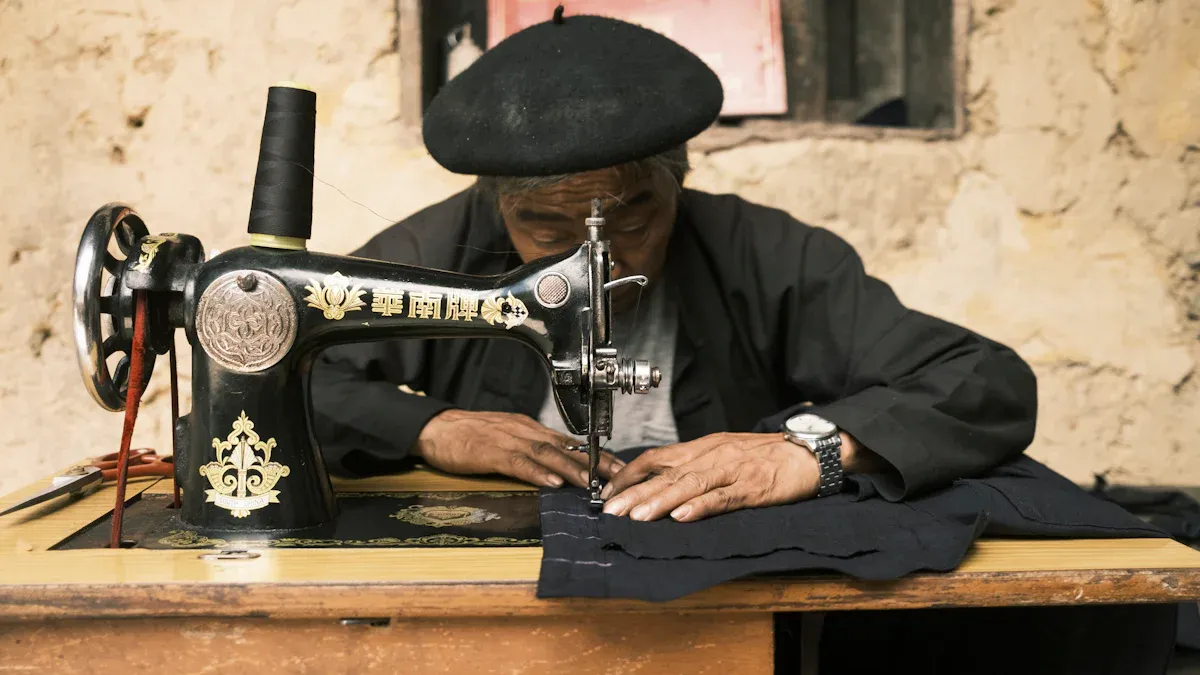
Have you ever thought about how the first working sewing machine changed things? In 1830, Barthélemy Thimonnier got a patent for his sewing machine. He used a hooked needle and one thread to make a chain stitch. This new way let people sew straight seams. It was a big improvement. Older machines tried to copy hand sewing with lots of parts. Thimonnier's design was much simpler.
Thimonnier's sewing machine made uniforms for the French Army.
His factory was the first to use machines to make clothes.
The invention made sewing faster and easier for factories.
Thimonnier's sewing machine helped the clothing business in France grow. By 1841, his machines sewed army uniforms in Paris. This change made many tailors afraid. Some tailors broke his machines because they worried about losing jobs. The first real sewing machine started a big change in sewing.
Now let's look at America. In 1818, John Adams Dodge and John Knowles built the first sewing machine in America. Their machine could sew a short piece of cloth before stopping. Dodge did not patent or make more machines because he was busy. Their sewing machine was not good for making lots of clothes, but it was a start.
The Dodge and Knowles machine made a decent stitch.
It was America's first sewing machine, but not the first successful one.
Their machine could not sew large pieces of cloth.
Elias Howe made a big difference. He got a patent for his sewing machine in 1846. His machine used a lockstitch. This set new rules for sewing machines. Howe's patent helped him win court cases and get money. Many companies started making sewing machines like his. The sewing machine business grew fast in the United States.
Here are some important moments in sewing machine history:
1790: Thomas Saint made the first sewing machine. This started the idea for future machines.
1846: Elias Howe patented the first successful sewing machine with a lockstitch.
1850s: Isaac Singer made Howe's machine better by adding a foot pedal. This made sewing easier.
Patent fights changed the sewing machine business. At first, these fights slowed down new ideas. Later, companies worked together and shared patents. This helped more people make sewing machines and made them cheaper. The sewing machine became important for making things and for everyday life.
You can't talk about sewing machines without the Industrial Revolution. This time changed how people made clothes. Before machines, sewing was slow. People stitched each piece by hand. The First Industrial Revolution happened from 1760 to 1840. Factories started using machines for many jobs, especially in textiles.
The Industrial Revolution switched work from hands to machines, especially for textiles.
More people needed clothes, so factories had to work faster.
Inventors wanted better sewing machines to help make clothes.
Factories got bigger quickly. Many people moved to cities for jobs. In 1851, almost half of women workers in England worked in factories. About 40% of these women sewed at home for factories. When industrial sewing machines came, factories made more clothes. Families could buy more clothes. Cotton became very important. Farmers planted cotton in new places to keep up.
Sewing machines helped people get more clothes for less money. The history of sewing shows how this invention changed life and work for millions.
Let's talk about Singer. You probably know the name. Isaac Singer did not invent the sewing machine. He made sewing machines easier to use and cheaper. Singer used parts that could be swapped out. This made making machines cost just ten dollars. He sold them for forty dollars, so more people could buy them. Sewing machines were not just for factories anymore. People could have one at home.
Singer's mass production changed things a lot. Making a shirt by hand took about 14.5 hours. With a Singer sewing machine, it took only 1.5 hours. That is much faster! Ready-to-wear clothes became possible for more people. More jobs opened up, especially for women. Singer's ideas changed the history of sewing machines.
Here is how Singer's sales grew over time:
Year | Units Sold |
|---|---|
1853 | 810 |
1859 | 10,953 |
1867 | 43,053 |
1871 | 181,260 |
1873 | 232,444 |
1876 | 262,316 |
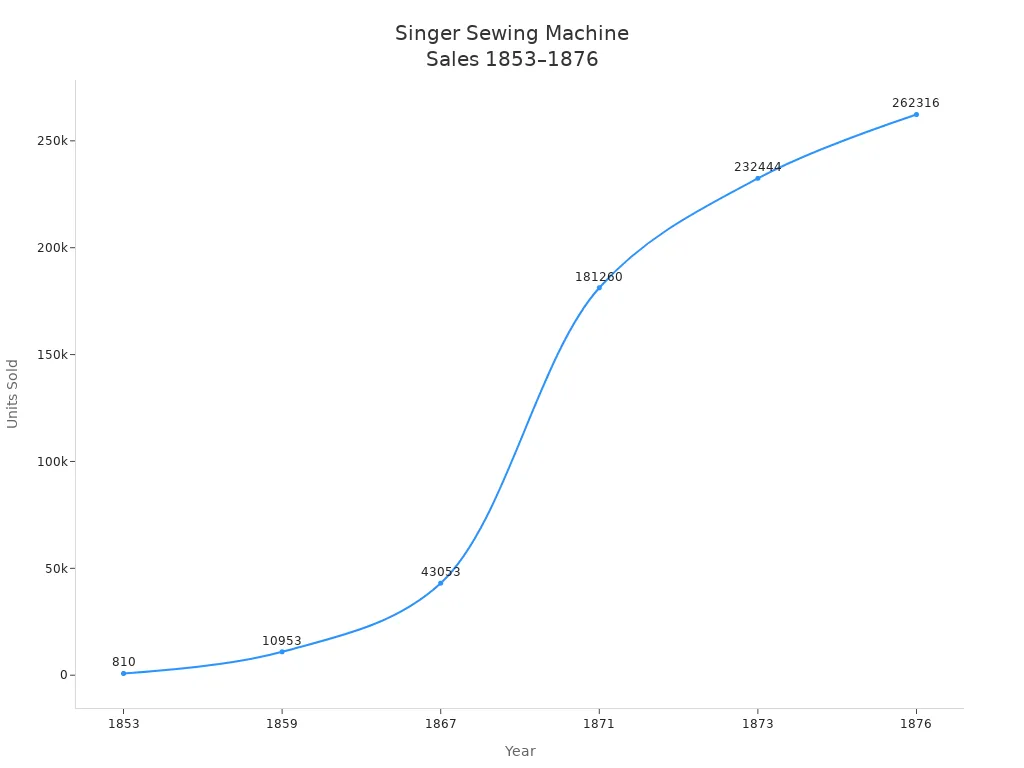
You can see Singer's sewing machines spread quickly. The history of sewing machines has many moments like this, where one idea changes everything.
The history of sewing machines is not just about inventions. It is also about fights over who owned the ideas. Patent wars shaped the history of sewing machines. Elias Howe got the first U.S. patent for a sewing machine in 1846. Isaac Singer made machines that used Howe's ideas. This started a long fight.
Elias Howe got the first U.S. patent for a sewing machine in 1846.
Isaac Singer became famous by using Howe's design.
The Sewing Machine Combination formed in 1856 to handle patent fights.
Here is what happened:
Elias Howe patented his lockstitch sewing machine in 1846.
Isaac Singer made sewing machines that used Howe's patent.
Howe sued Singer, starting a five-year court fight.
Howe won and got money from Singer.
The Sewing Machine Combination tried to stop lawsuits. This group had the biggest names in sewing. They shared patents and worked together. But they also controlled the market. New inventors had trouble joining in. Prices stayed high, and companies made big profits. Patent wars slowed down new ideas for a while. Still, sewing machines kept changing the world.
The history of sewing machines is not just about making clothes. It is about people, ideas, and fights over credit. The story of sewing machines is about invention, business, and change.
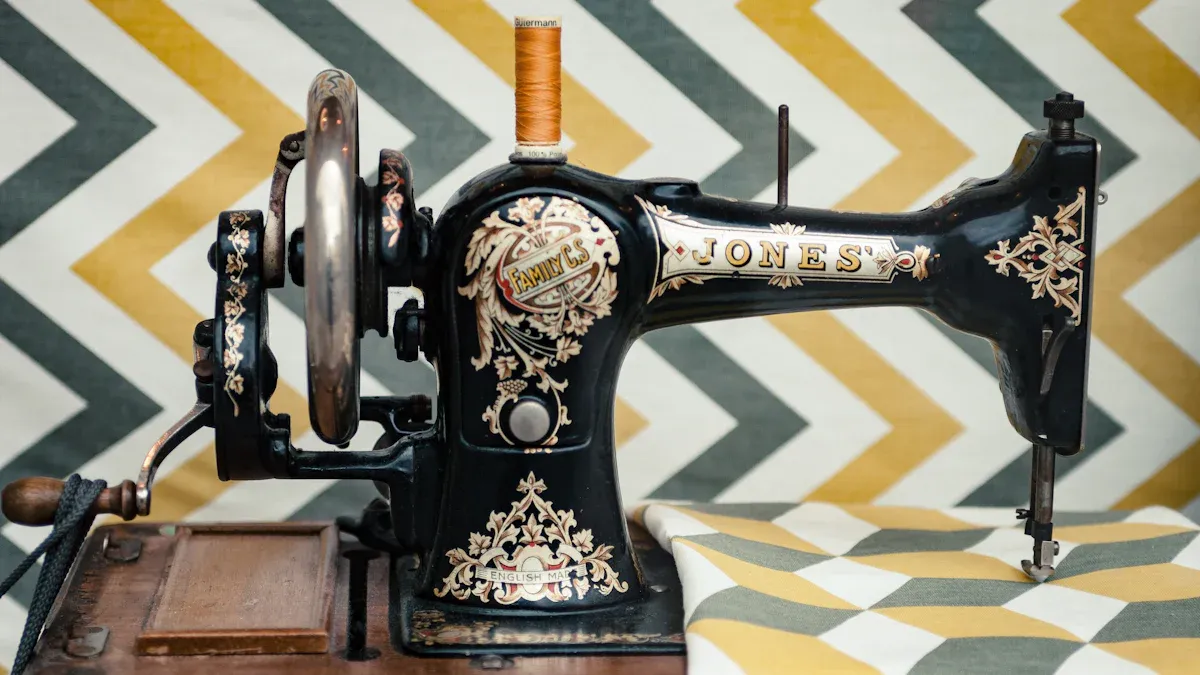
Long ago, sewing machines had big pedals and heavy wheels. People pushed the pedals with their feet to make them work. In the early 1900s, things changed a lot. Electric sewing machines started to replace the old manual ones. Sewing became much faster and easier. Singer made the first electric sewing machine in 1889. This new machine helped everyone sew with less effort. You did not need strong arms or legs anymore. Some machines had lights built in, so you could see your stitches at night. Sewing was more fun and less tiring. You could finish your projects quickly and enjoy making things.
Modern sewing machines look very different now. Many have touchscreens, buttons, and computers inside. These machines can save hundreds of patterns for you. You can sew hard designs with just a few taps. Industrial sewing machines work very fast and sew thick things like denim and leather. Factories use these machines to make shoes, bags, and car seats. Here are some features of modern sewing machines:
Feature | Description |
|---|---|
Large Sewing Area | Lets you work on big projects and detailed patterns. |
High-Speed Performance | Sews up to 2800 stitches per minute for quick results. |
Programmable Operation | Stores up to 999 patterns for easy repeat work. |
Advanced Control Interface | Touchscreen panel for simple navigation and adjustments. |
Electronic Precision | Automatic thread trimming and real-time monitoring. |
Heavy-Duty Compatibility | Handles thick fabrics with strong motors. |
Efficient Workflow | Automation reduces manual work and boosts quality. |
Factories like these machines because they save time and make better products. You get neat stitches and fewer mistakes. Sewing is faster and lets you be more creative.
Some companies, like Strong H, lead the way in new sewing machine technology. Strong H makes parts for industrial sewing machines that help factories work better. Their machines use special control systems for perfect stitches. Artificial vision helps the machine see the fabric and change settings by itself. Internet connections let you check your sewing machine from anywhere. Robots help with boring jobs, so people can do creative work. Strong H also tries to protect the environment. Their machines use less energy and make less waste. You get fast sewing, better accuracy, and lower costs. Modern sewing machines keep changing how people sew and how factories work. There will be even more cool changes in the future.
Factories used to sew everything by hand. This took a long time and lots of work. When sewing machines came, things changed fast. People could make shirts and pants much quicker. Factories started making many clothes at once. Clothes got cheaper, and stores had more styles. Sewing machines helped not just fashion, but also upholstery and shoes. New jobs appeared in factories. More people could buy nice clothes.
Sewing machines made making clothes faster. Factories grew bigger, and cities got larger. More people wanted clothes, so companies worked harder. Sewing machines helped businesses make more clothes. You got lower prices and more choices.
Here's how the global sewing machine market grew:
Year | Global Sewing Machine Market Size (USD million) | CAGR (%) |
|---|---|---|
2021 | 5,960.3 | N/A |
2030 | 8,502.7 | 6.1 |
Factories in the United States changed a lot too:
Year | United States Industrial Sewing Market Size (USD million) | CAGR (%) |
|---|---|---|
2024 | 457.53 | N/A |
2025 | 472.62 | N/A |
2033 | 612.80 | 3.3 |
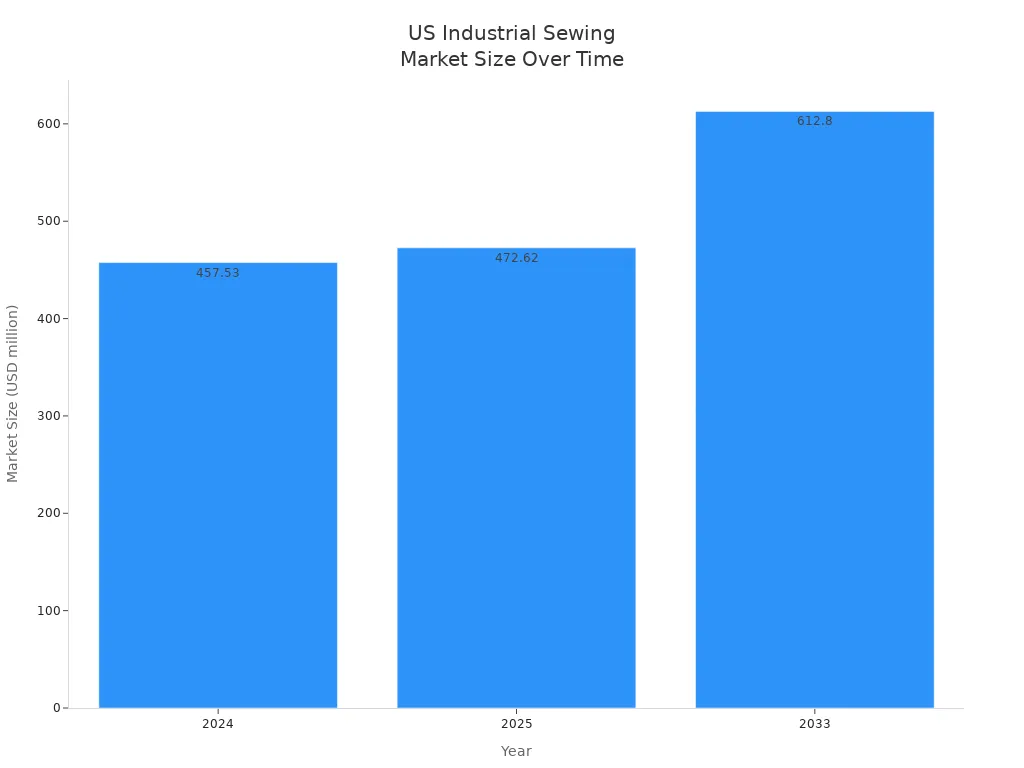
You can see sewing machines help the textile industry grow. The sewing machine does more than make clothes. It changes how you live and what you wear.
Sewing machines changed more than factories. They changed people's lives, especially for women. Before sewing machines, sewing took hours at home. Women spent lots of time making clothes for family. Sewing machines gave women new chances. You could work in a factory or start a business. Sewing became a way to earn money and show your style.
Women started working outside the home more. Sewing turned into a hobby, not just a chore. Some women used sewing machines to make fashion and show creativity. Sewing machines helped women try new things and be independent. This change helped women's rights grow. Sewing became a sign of freedom and choice.
Sewing used to mean saving money and caring for family. Now, it means being creative and independent. Sewing machines helped women try new roles and plan their futures.
Before the 1970s, women had to know how to sew. People thought sewing was needed to be a good mom or wife. Later, sewing became fun and relaxing. You could make clothes for yourself or others. Sewing machines gave women more control over work and life.
Sewing machines leave a mark you still see today. Here are some ways they changed things:
You get clothes faster and cheaper because sewing machines work quickly.
Sewing is not just for experts. You can buy a sewing machine and make things at home.
Fashion grows fast. Designers use sewing machines to make new styles and follow trends.
Sewing machines led to other inventions, like embroidery and knitting machines. Now, you see computerized sewing machines with smart features. These machines help you sew better and be more creative. Companies like Strong H keep making new designs and controls. You get better quality, more choices, and easier sewing.
Sewing machines keep changing things. You see new technology, more jobs, and lots of new ideas in fashion and textiles.
Sewing machines help you show your style, save money, and have fun making things. Their impact touches your home, your job, and your community. You can expect even more changes as sewing machines get smarter and stronger.
You saw sewing machines go from hand sewing to smart machines. Now, sewing machines help you make clothes quickly and well. New technology brings strong fabrics and digital copies to your closet. Nanotextiles are also part of new clothes. AI and robots help make sewing safer in factories. They also make sewing more fair for workers. Sewing machines keep getting better every year. Groups use blockchain to track how clothes are made. They also work to protect the planet. You get clothes made with care and respect. When you sew, you join a story that grows with each stitch.
You use a sewing machine to stitch fabric much faster than by hand. Machines keep stitches even and strong. You save time and get better results for big projects.
Elias Howe invented the first successful sewing machine in 1846. His lockstitch design changed how you sew and made sewing much easier for everyone.
Modern machines use computers and smart controls. You can sew faster and make fewer mistakes. Factories use these machines to create more clothes with less effort.
Yes! You can sew clothes, bags, or crafts at home. Sewing machines let you try new designs and fix things easily. You get to show your style and creativity.