Views: 0 Author: Site Editor Publish Time: 2025-09-16 Origin: Site
Have you ever stood in front of a row of machines, wondering if you need a sewing machine or a serger for your next sewing project? You might feel confused by all the options. A sewing machine helps you stitch fabric together for most sewing projects, while a serger gives your edges a neat, professional finish. Choosing the right tool can make sewing easier and help your creations look their best.
A sewing machine is important for most sewing jobs. It lets you sew seams, put in zippers, and make buttonholes.
A serger gives a neat finish by cutting and wrapping fabric edges. It works well for stretchy fabrics and fast sewing.
Think about what you want to sew. A sewing machine is good for fixing clothes and simple projects. A serger is best for finishing edges and sewing knits.
When picking a machine, check for features that fit your skills and projects. Look for stitch choices and if it is easy to use.
Using both a sewing machine and a serger can make sewing better. You get more options and your work looks more professional.
A sewing machine is the main tool for making clothes and crafts. It joins two pieces of fabric with straight stitches. You can use it for many projects, like hemming pants or making quilts. Some machines have hundreds of stitches to choose from. You can pick straight, zigzag, or decorative stitches.
A sewing machine uses a top thread and a bobbin thread. The needle goes up and down to make strong stitches. You can sew seams, add zippers, and make buttonholes. At home, people use basic sewing machines for repairs or fun projects. In factories, bigger machines sew thick materials and do large jobs. Some machines do one job, like making buttonholes quickly.
Tip: If you want embroidery or fancy stitches, get a machine with many stitch choices.
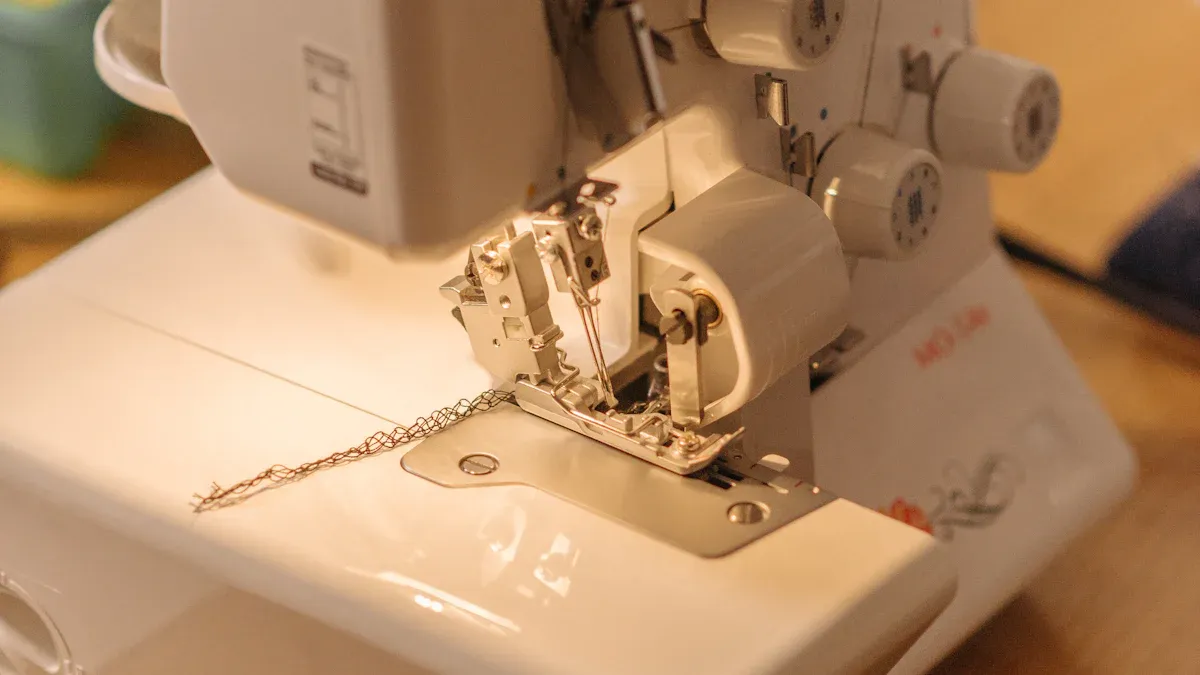
A serger looks different from a sewing machine. Some people call it an overlocker. It uses three or more spools of thread at once. It cuts the edge of fabric and wraps it with stitches in one step. Sergers work fast and make seams look neat and professional.
A serger does not use a bobbin. It uses loopers and needles to make strong, stretchy stitches. These stitches stop fabric edges from fraying. If you sew knits or stretchy fabric, a serger makes seams that stretch. Many sergers have a differential feed. This helps you sew smooth seams on tricky fabrics like knits or thin materials.
Note: A serger cannot do every job. You still need a sewing machine for topstitching, buttonholes, and most sewing work.
When you compare a serger and a sewing machine, you see big differences. Here's a quick look:
Feature | Sewing Machine | Serger |
|---|---|---|
Primary Function | Sew seams | Finish seams |
Stitch Options | Hundreds of stitches available | Usually one stitch type |
Thread Usage | Uses top and bottom thread | Uses three or more spools of thread |
Bobbin | Yes | No |
You use a sewing machine for joining pieces, adding zippers, or making buttonholes. A serger is best for finishing edges or sewing stretchy seams. Serger stitches look neat and help your projects last longer.
If you work in a factory or have a sewing business, machine performance matters. Upgrading your industrial sewing machine with Strong H parts helps a lot. Strong H sells high-quality parts that make sewing easier and better. Their parts help you switch seam types and sew different fabrics. Your machines can handle any project.
Remember: The right machine and good parts help you sew faster and better.
You might wonder when a sewing machine is the best choice. If you want to make clothes, bags, or home décor, you'll reach for your sewing machine most of the time. It lets you sew straight seams, zigzag stitches, and buttonholes. You can hem pants, attach zippers, and add decorative touches. Beginners love sewing machines because they offer control and flexibility.
Here are some features you should look for in a sewing machine:
A strong motor and gears help you sew thick or thin fabrics.
Foot control gives you better sensitivity while sewing.
Essential stitch types like straight, zigzag, blind-hem, and automatic buttonhole make your projects easier.
Adjustable stitch length and width let you customize your work.
A needle threader saves time and effort.
Multiple needle positions help with tasks like inserting zippers.
If you sew at home, you'll use your sewing machine for most projects. In factories, workers rely on industrial sewing machines for speed and power. Upgrading your equipment with Strong H industrial sewing machine parts can boost your productivity and make sewing smoother. Their advanced parts help you switch between seam types and handle different fabrics with ease.
Tip: Choose a sewing machine with features that match your skill level and the types of projects you want to try.
A serger steps in when you want a professional finish. It trims fabric edges and wraps them with thread in one quick motion. If you work with stretchy fabrics, a serger creates seams that move with the fabric. You'll love how fast it works and how neat your projects look.
Some projects are perfect for a serger:
Easy napkins with clean, serged edges.
Infinity scarves made from lightweight fabrics.
Embellished pillows that show off your serging skills.
T-shirt scarves from recycled shirts.
Creative hair accessories inspired by vintage styles.
No-pattern t-shirts and dresses for quick sewing.
Fleece blankets with smooth, finished edges.
A serger shines when you want speed and a polished look. If you sew knits, activewear, or anything that needs strong, stretchy seams, you'll reach for your serger. In industrial settings, sergers help workers finish garments quickly and keep edges from fraying.
Note: A serger can't replace a sewing machine for tasks like buttonholes or topstitching, but it makes edge finishing much easier.
You might ask yourself, “Do I need both machines?” The answer depends on your sewing goals. If you love making clothes and want your projects to look store-bought, having both a sewing machine and a serger gives you more options. You can sew seams, add details, and finish edges like a pro.
Let's look at some scenarios:
Home sewing: You can start with a sewing machine. Add a serger when you want faster edge finishing or work with knits.
Industrial sewing: Factories often use both machines. Workers sew seams with industrial sewing machines and finish edges with sergers. Upgrading with Strong H parts helps you get the most out of your equipment, making your workflow smoother and more efficient.
Here's a quick table to help you decide:
Situation | Sewing Machine Needed | Serger Needed | Both Beneficial |
|---|---|---|---|
Basic repairs | ✅ | ||
Making garments | ✅ | ✅ | ✅ |
Sewing knits | ✅ | ✅ | |
Quilting | ✅ | ||
Professional finishes | ✅ | ✅ | |
Industrial production | ✅ | ✅ | ✅ |
When you think about choosing the right machine, consider your budget, the features you need, and the types of projects you want to tackle. If you want versatility and professional results, using both machines can help you reach your sewing goals. For industrial use, Strong H stands out as a trusted partner for upgrading or maintaining your sewing machines, so your business stays ahead.
Remember: The right tools make sewing fun and help your projects look their best.
When you start sewing, a sewing machine feels like your best friend. You can use it for almost any project, from simple repairs to creative crafts. Here are some things you might love about a sewing machine:
You finish projects much faster than sewing by hand.
The seams you create are strong and last a long time.
Your stitches look even, which gives your work a professional touch.
Mechanical sewing machines cost less and last for years if you take care of them.
Computerized models offer lots of stitch choices and are easy for beginners.
But every tool has its challenges:
Learning to use a sewing machine takes time and patience.
Good machines can be expensive, especially if you want advanced features.
Some machines are big and heavy, so moving them is not easy.
Mechanical models do not have as many features, and you need more skill to get perfect results.
Sometimes, you might deal with thread jams or uneven seams, which can be frustrating.
Tip: If you are just starting, pick a sewing machine that matches your skill level and space.
A serger helps you get professional-looking seam finishes that make your projects stand out. You can sew, trim, and finish edges all at once. Here's a quick look at the pros and cons:
Pros | Cons |
|---|---|
You get professional-quality seam finishes | Setting up and threading can be tricky at first |
Sergers work fast and handle seams quickly | Adjusting thread tension and changing colors takes practice |
The machine trims fabric as you sew | The cutting knife can damage fabric if you are not careful |
Perfect for stretchy fabrics and knits | Sergers cost more and do fewer tasks than sewing machines |
Your seams look neat and last a long time | You need extra space for a serger in your sewing area |
If you want your sewing projects to look professional, a serger makes a big difference. You will love how quickly you can finish seams and how neat everything looks. Just remember, a serger works best when you want speed and professional results, but you still need a sewing machine for most basic tasks.
When you sew, finishing edges is a big part of making your projects look neat and last longer. You have a few great ways to finish edges with your sewing machine. Each method helps with preventing fabric fraying and gives your work a polished look.
Here are some of the most effective techniques for finishing edges:
Zig-Zag Stitch: You can use this stitch to cover raw edges. Adjust the width and length to fit your fabric. Make sure the needle catches the edge each time.
Overlock/Overedge Stitch: Some sewing machines have this option. It combines straight and zigzag stitches, giving you a clean finish. Try using a special foot to keep your edges lined up.
Pinking Shears: If your machine does not have special stitches, you can cut the edges with pinking shears. The jagged cut helps stop fraying.
You might want to try creating rolled hems for a delicate finish on lightweight fabrics. This technique works well for scarves or napkins. No matter which method you choose, finishing edges with your sewing machine makes your projects look more professional.
Take a look at the main advantages of using a sewing machine for finishing edges:
Advantage | Description |
|---|---|
Professional Quality | You get smooth, neat, and durable seams that look great. |
Durability | Finished edges help your clothes last longer by stopping unraveling. |
Efficiency | You can trim, sew, and finish in one go, saving you time. |
Reduced Fabric Waste | You only use what you need, which is great for big sewing projects. |
Longer Lasting Garments | Your finished seams stay strong, so your clothes hold up over time. |
Tip: Always test your finishing method on a scrap piece before sewing your final project.
While your sewing machine does a good job at finishing edges, it has some limits when you compare it to a serger. You might notice these differences when you work on big projects or stretchy fabrics.
Zigzag stitches help with finishing edges, but they do not last as long as serger stitches.
Overcast stitches can look like serger finishes, but they do not trim the fabric as you sew.
French seams give a nice finish, but they take more time and effort than using a serger.
Bias binding wraps around edges, but it does not stop fraying as well as a serger.
A serger trims, sews, and finishes edges all at once. It works faster and gives you a stronger, cleaner finish, especially on knits. If you want the best results for finishing edges or need to work quickly, a serger is hard to beat.
Are you thinking about buying a serger for your sewing projects? You want to make sure you pick the right one for your needs. If you sew at home, you should focus on a few important things before you decide.
Budget: Figure out how much you want to spend. Sergers can cost a little or a lot, depending on the features.
Brand Reputation: Check out different brands. Some brands are known for making reliable machines that last.
Ease of Threading: Threading a serger can be tricky. Look for models that make this step simple, especially if you are new to sewing.
Differential Feed: This feature helps you sew different fabrics without stretching or puckering. It's a must if you work with knits or thin materials.
Testing the Machine: Try the serger in person if you can. You want to see how it feels, how loud it is, and if it's easy to use.
If you plan to use a serger for industrial sewing, you need to look for extra features. Take a look at this table to see what matters most:
Feature | Description |
|---|---|
Stitching Capability | Choose a 5-thread serger for strong, professional seams. |
Differential Feed | Keeps seams smooth on stretchy fabrics. |
Threading System | Color-coded threading saves time and effort. |
Sewing Speed | High speed helps you finish big jobs faster. |
Durability | A sturdy build handles tough materials and long hours. |
High Presser Foot Lift | Lets you sew thick layers with ease. |
Adjustable Pressure | Makes it easy to sew different fabric types. |
Motor Power | More power means better performance for industrial use. |
Tip: If you work with heavy fabrics or need to sew fast, a 5-thread serger can make your job easier.
When you start shopping, you'll notice that sergers come with lots of features. Some models offer basic stitches, while others include coverstitch or chainstitch options. If you want a machine that does it all, expect to pay more. For example, a combination serger like the Singer Professional 14T968DC costs several hundred dollars more than basic models such as the Singer S0100.
You should also think about your sewing goals. If you only need to finish edges, a simple serger might be enough. If you want to make clothes with strong seams, look for a 5-thread serger. This type gives you extra durability and a professional look.
Here are some things to keep in mind about price and features:
Sergers with more stitch options and advanced features cost more.
Coverstitch and chainstitch functions add to the price.
For industrial sewing, avoid budget sergers. You need a machine with a strong motor and sturdy parts.
Note: Buying a serger is a big step. Take your time, compare models, and choose one that fits your sewing style and budget.
Choosing between a sewing machine and a serger depends on what you want to make and how you like to sew. Think about your projects, fabric types, and budget. For most repairs or quilting, a sewing machine works best. If you want neat seams on clothes, a serger helps a lot. Remember, many sewists forget to check their real needs or the learning curve. Visit local dealers, try machines, and ask questions. You can find the right fit for your sewing journey!
Project types matter—clothes need a serger, but repairs need a sewing machine.
Beginners often find sewing machines easier to use.
Local shops offer classes and support.
Trust yourself. The best machine is the one that helps you enjoy sewing and create what you love.
You can't replace a sewing machine with a serger. A serger finishes edges and seams, but you need a sewing machine for tasks like buttonholes, zippers, and topstitching.
You get great results with knits, stretchy fabrics, and lightweight materials. Sergers handle tricky fabrics well and keep edges from fraying.
Threading a serger looks tricky at first. Many models have color-coded guides to help you. You get faster with practice.
You don't need special thread. Regular polyester or cotton thread works fine. You might want to use cones for longer sewing sessions.
Tip: Always test your serger settings on scrap fabric before starting your project.